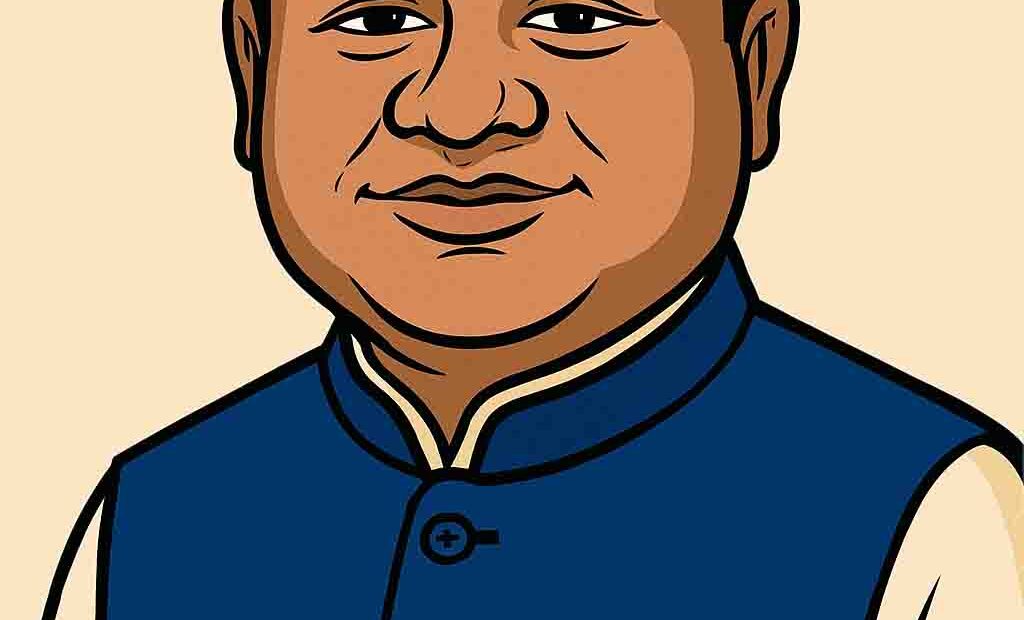
“A Chief Minister in the Shadows: Mohan Majhi and the Masters Around Him”. Odisha’s political landscape has undergone a seismic shift. After 24 years of uninterrupted rule under Naveen Patnaik and the Biju Janata Dal (BJD), the Bharatiya Janata Party (BJP) has finally breached the fortress. But the victory, though historic, has birthed more questions than answers—chief among them: Why Mohan Charan Majhi?
Majhi’s appointment as the 15th Chief Minister of Odisha was not just unexpected—it was confounding. In a state brimming with seasoned BJP leaders like Dharmendra Pradhan and Jual Oram, the Modi-Shah duo’s decision to elevate Majhi, a relatively low-profile tribal leader from Keonjhar, has left many political observers scratching their heads.
“There were more experienced hands available. Majhi’s elevation is a signal—but to whom, and for what purpose?” remarked a senior BJP functionary on condition of anonymity.
A Mandate for Change, A Government in Limbo
The BJP’s campaign in Odisha was built on the promise of transformation—economic revitalization, administrative transparency, and a break from the personality-driven politics of the Patnaik era. Yet, two months into Majhi’s tenure, the state machinery appears rudderless. No major reforms have been announced. Development projects remain stalled. Bureaucratic reshuffles have been minimal. And the Chief Minister’s public visibility has been sporadic at best.
“Odisha voted for change, not confusion,” said Congress leader Narasingha Mishra. “What we see today is a government caught in its own contradictions.”
Multiple power centres within the BJP’s state unit have reportedly emerged, each pulling in different directions. Majhi, insiders say, lacks the political heft to assert control or unify the party’s disparate factions. The result: a leadership vacuum that threatens to derail the very mandate the BJP was entrusted with.
Tribal Symbolism vs. Administrative Substance
Majhi’s tribal identity was undoubtedly a factor in his selection—a nod to inclusivity and representation. But symbolism alone cannot substitute for governance. Odisha’s challenges are complex: from mining sector reforms and tribal welfare to climate resilience and industrial growth. The Chief Minister’s silence on these fronts has begun to erode public confidence.
“Majhi’s appointment was strategic, but strategy must translate into delivery,” noted political analyst Dr. Bidyut Mohanty. “Otherwise, it risks becoming tokenism.”
Even within the BJP, murmurs of discontent are growing louder. Some leaders privately admit that Majhi’s lack of assertiveness is hampering policy execution. Others suggest that real power lies elsewhere—with Delhi, or with more senior state leaders operating behind the scenes.
Unless the BJP resolves its internal power dynamics and empowers Majhi to govern decisively, the promise of a new Odisha may remain unfulfilled—trapped in a web of competing ambitions.Majhi’s leadership is being diluted by the presence of multiple political masters—senior BJP figures, central strategists, and factional influencers—each wielding influence over state affairs. This diffusion of authority has led to administrative paralysis, with no major reforms or development initiatives taking shape.
“Majhi may wear the crown, but others hold the scepter,” writes the columnist, pointing to the lack of decisive governance.
The Road Ahead: Course Correction or Continued Drift?
Odisha stands at a crossroads. The electorate has spoken, but the government seems unsure of its voice. For Majhi, the coming months will be critical. He must either rise to the occasion—assert authority, build consensus, and deliver on promises—or risk becoming a placeholder in a larger political chessboard.
“Leadership is not just about occupying the chair. It’s about owning the moment,” said former BJD MP Baijayant Jay Panda. “Odisha deserves clarity, not chaos.”
The BJP’s experiment in Odisha is far from over. But unless it recalibrates its approach and empowers its Chief Minister to lead decisively, the promise of a new era may remain just that—a promise.
The Author is Dr Satya Brahma, Chairman & Editor-In-Chief of Network 7 Media Group
Author

Satya Brahma’s Vision India
Photo Gallery