
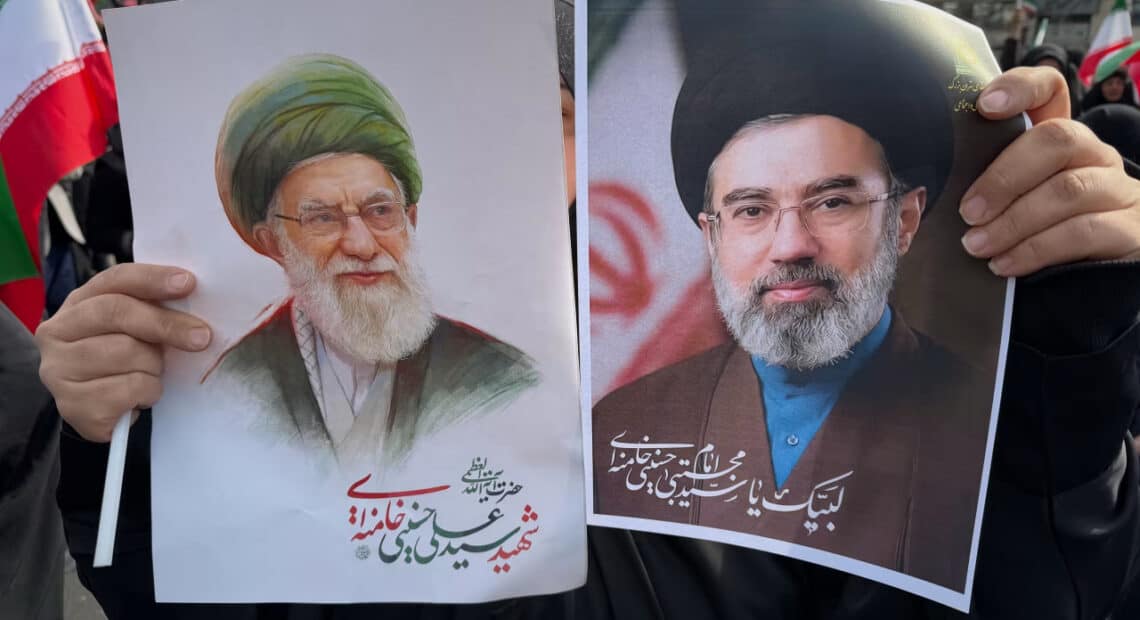
Trump Rejects Iran Ceasefire As Centcom Blitzes Kharg Island; Global Oil Markets Shudder.
SHATTERED PEACE: Why the collapse of the March 15th ceasefire marks a dangerous new chapter in the Gulf conflict. As the smoke rises over Kharg Island, the world watches to see if Mojtaba Khamenei will deliver on his promise of ‘Total Retaliation.
As of March 15, 2026, the war between the United States, Israel, and Iran is in its third week following a massive air campaign that began on February 28. Both sides have recently rejected ceasefire proposals, with Iran demanding an end to U.S. and Israeli strikes and U.S. President Donald Trump stating the terms are “not good enough”.
The nations most impacted by the West Asia conflict include India, Saudi Arabia, the Gulf states (UAE, Qatar, Kuwait, Bahrain, Oman), and broader Asian economies heavily dependent on energy imports. The Strait of Hormuz — a narrow 54 km-wide corridor — has become the new buzzword in global geopolitics, as its closure threatens nearly 20% of the world’s oil and LNG flows, making it the single most critical chokepoint in the energy trade.
Nations Most Impacted
- India:
- Imports nearly 46% of crude oil and over half of LNG from Hormuz-linked nations.
- Gas shortages already visible in Bengaluru and Mumbai, crippling vendors and households.
- Government is engaging Gulf Cooperation Council, Iran, U.S., and Israel to secure supplies.
- Gulf States (UAE, Qatar, Kuwait, Bahrain, Oman):
- Directly exposed to Iranian military pressure and retaliatory strikes.
- Economies rely on uninterrupted oil and LNG exports through Hormuz.
- Saudi Arabia:
- World’s largest energy producer; refinery operations disrupted by Iranian attacks.
- Aramco’s Ras Tanura complex was forced to halt exports, shaking global supply chains.
- Russia:
- Ironically benefits, earning an extra $150 million/day as oil prices surge past $100/barrel.
- Gains leverage in energy markets despite sanctions.
- Global Importers (Japan, South Korea, EU):
- Highly dependent on Gulf oil and LNG, facing rising costs and supply insecurity.
The Strait of Hormuz: The New Buzzword
- Geography & Scale:
- At its narrowest, only 54 km wide.
- Handles 20 million barrels of oil per day — nearly 20% of global supply.
- Strategic Importance:
- Connects the Persian Gulf to the Gulf of Oman and Arabian Sea.
- Critical for exports from Saudi Arabia, UAE, Kuwait, Qatar, and Iraq.
- Few viable alternatives exist; pipelines cannot match Hormuz’s capacity.
- Conflict Impact:
- Closure has transformed Hormuz into a symbol of vulnerability in global trade.
- Insurance premiums for tankers have skyrocketed, rerouting costs are crippling.
- The phrase “Hormuz Risk” is now shorthand for energy insecurity and geopolitical volatility.
Human & Economic Fallout
- India’s LPG Crisis: Vendors in Bengaluru and Mumbai face shortages, directly linking local livelihoods to distant geopolitical battles.
- Global Inflation: Rising fuel costs ripple into transport, food, and manufacturing worldwide.
- Strategic Realignment: Nations are accelerating diversification — investing in renewables, alternate pipelines, and strategic reserves.
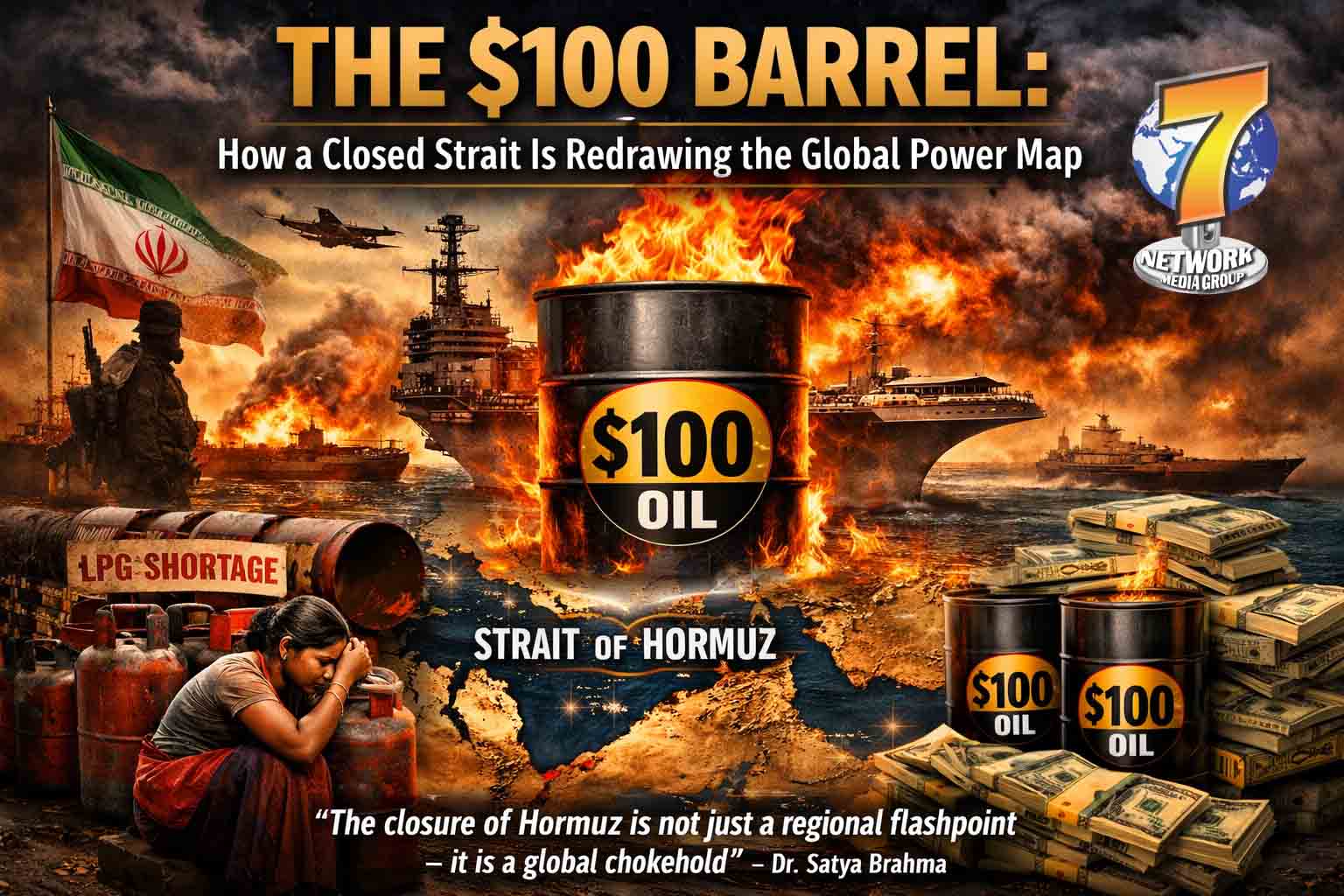
The $100 Barrel: How a New Supreme Leader and a Closed Strait Are Redrawing the Global Power Map
The Power Shift
In Tehran, the rise of Mojtaba Khamenei has sent shockwaves across West Asia. Once a shadowy cleric, he now commands the levers of Iran’s power structure. The U.S. Treasury has placed a $10 million bounty on his head, branding him the architect of destabilization. His ascent signals a generational shift in Iran’s leadership — one that blends ideological rigidity with strategic defiance.
The Choke Point
The Strait of Hormuz, the world’s most critical energy artery, has been sealed off by Iranian forces. In response, Washington has mobilized a U.S.-led naval escort mission, deploying carrier strike groups to safeguard tankers. The closure has transformed a narrow waterway into the epicenter of global confrontation, with every vessel now a pawn in a high-stakes geopolitical chessboard.
The Economic Fallout
Oil markets have erupted. Crude has surged past $100 a barrel, rattling economies from New Delhi to New York. In a twist of irony, Russia — isolated by sanctions — is reaping an unexpected $150 million-a-day windfall, as energy-starved nations scramble for alternative supplies. The crisis underscores how one choke point can redraw the contours of global power and wealth.
Human Impact
Beyond boardrooms and battlefields, the crisis is hitting ordinary lives. In Bengaluru and Mumbai, the so-called “LPG Crisis” has crippled local vendors. Street food stalls, households, and small businesses are struggling as gas cylinders vanish from supply chains. For millions, the conflict in West Asia is no longer a distant headline — it is a daily struggle to cook, to work, to survive.
Recent Military Developments
Strikes on Kharg Island: The U.S. Central Command (CENTCOM) conducted a large-scale precision strike on Kharg Island, Iran’s primary oil export hub. While U.S. officials claim only military targets were “obliterated” and oil infrastructure was spared for leverage, Iran has threatened to retaliate by targeting regional energy assets.
Isfahan Factory Attack: A missile strike hit a factory in Isfahan on Saturday, killing at least 15 workers.
Targeting Leadership: Israel reported killing two more senior Iranian intelligence officials, Abdollah Jalali-Nasab and Amir Shariat, in Tehran. This follows the earlier assassination of Supreme Leader Ayatollah Ali Khamenei at the war’s onset; he has been succeeded by his son, Mojtaba Khamenei.
Regional Fallout:
Iraq: The U.S. Embassy in Baghdad issued an urgent security alert for all U.S. citizens to leave Iraq immediately after a missile strike targeted the complex.
Gulf States: Iran continues to launch drones and missiles at the UAE, Saudi Arabia, Kuwait, Qatar, and Oman. Bahrain recently intercepted 125 missiles and 203 drones, while three foreign nationals were killed in the UAE.
Lebanon: Israel has intensified strikes on Beirut and southern Lebanon against Hezbollah, with the Lebanese death toll reaching at least 826. Economic and Logistical Impact
Strait of Hormuz: Iran has effectively blocked the strait to “enemy” vessels (U.S. and Israel) while allowing some exceptions, such as Indian ships. President Trump has called for an international naval coalition to keep the waterway open.
Global Markets: Global oil prices have surged by over 42% since the conflict began.
Sports Cancellations: Formula One has officially cancelled the Bahrain and Saudi Arabian Grands Prix, originally scheduled for April 2026, due to the regional instability.
Humanitarian Situation
The Iranian Red Crescent Society reports that nearly 43,000 civilian units have been damaged in Iran, and the total death toll within the country has passed 1,450 since February 28. Additionally, a U.S. strike on an Iranian girls’ school on the first day of the war is now under a “major” Pentagon investigation after reports suggested it killed over 100 students.
The closure of Hormuz is not just a regional flashpoint — it is a global chokehold. When oil crosses $100 a barrel, it redraws the power map, and ordinary citizens from Mumbai to Madrid feel the heat. This is the true cost of conflict.
Author


Satya Brahma’s Vision India

Photo Gallery