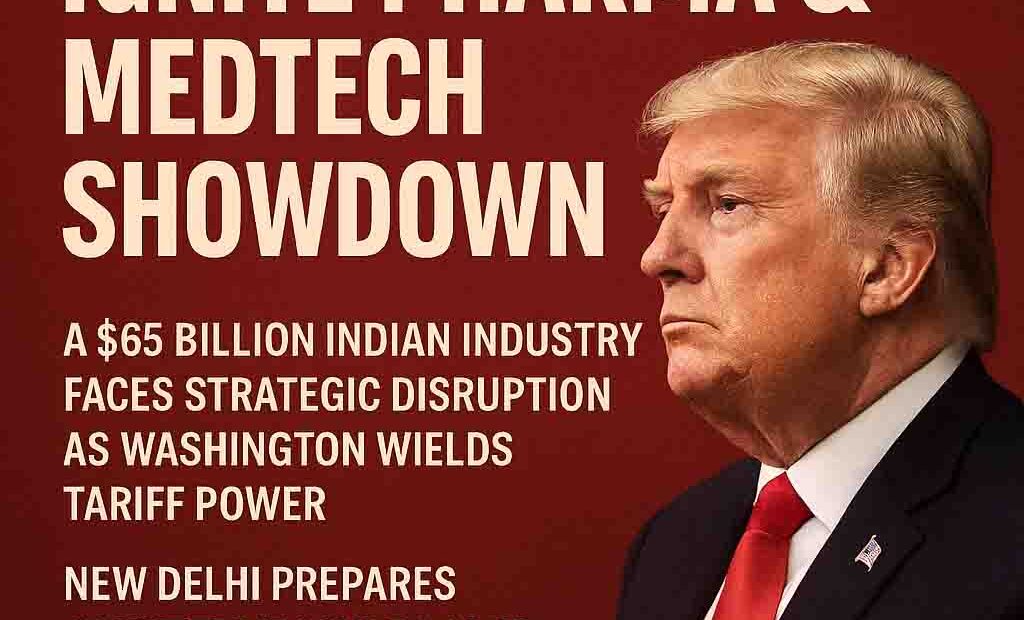
In a dramatic escalation of trade tensions, US President Donald Trump has imposed steep reciprocal tariffs on Indian exports, targeting pharmaceuticals and medical devices—two of India’s most globally competitive sectors. The move, part of Trump’s “America First” policy, aims to bolster domestic manufacturing and reduce reliance on foreign suppliers.
- Pharmaceuticals: Proposed tariffs of up to 25% on generic drug imports from India.
- Medical Devices: A 27% tariff now levied on Indian exports, up from 0%.
These measures come amid broader geopolitical friction over India’s energy ties with Russia and its growing trade surplus with the US.
US–India Trade Flashpoint: Trump Tariffs Ignite Pharma & MedTech Showdown
-
A $65 Billion Indian Industry Faces Strategic Disruption as Washington Wields Tariff Power
-
New Delhi Prepares Countermeasures Amid Mounting Pressure on Generic Drugs and Medical Exports
-
Healthcare Costs in the US Poised to Surge; Indian Manufacturers Eye Diversification and Diplomatic Leverage
Indian Pharma: A $58 Billion Giant Faces a $8.7 Billion Hit
India’s pharmaceutical industry, valued at $58 billion in FY25, is the world’s largest supplier of generic drugs and fulfills 47% of US generic drug consumption. In FY24 alone, India exported $8.7 billion worth of pharma products to the US, accounting for 31% of its total pharma exports.
Short-Term Impact:
- Margin Pressure: Indian firms operate on thin margins; tariffs could erode profitability.
- Stock Market Jitters: Sun Pharma and Lupin saw up to 6% declines post-announcement.
- Supply Chain Disruption: USFDA delays and tariff uncertainty may stall new launches.
Long-Term Hurdles:
- Regulatory Bottlenecks: FDA approval costs range from $9,280 to $540,000, making compliance costly.
- Market Diversification: Firms may pivot to Africa, Latin America, and Europe, but volumes and margins remain lower.
- FDI Slowdown: Tariff uncertainty may deter foreign investment in Indian pharma manufacturing.
Medical Devices: A $12 Billion Sector Faces a 27% Wall
India’s medical device industry, currently valued at $12 billion, exported $714 million worth of devices to the US in FY24. These exports largely consist of low-cost, high-volume consumables like syringes, catheters, and diagnostic kits.
Immediate Fallout:
- Loss of Competitiveness: US buyers may shift to Mexico, Ireland, or Puerto Rico.
- FDI Risk: Foreign investors may prefer tariff-friendly hubs over India.
- Regulatory Asymmetry: FDA costs for Indian exporters far exceed those faced by US firms entering India.
Strategic Concerns:
- Non-Tariff Barriers: Regulatory hurdles remain a bigger challenge than tariffs.
- Supply Chain Diversification: India must invest in high-tech manufacturing and quality certifications (ICMED, ISI).
- Make in India at Risk: Without reciprocal tariff protections, domestic manufacturers may lose ground.
US Gains: Domestic Revival or Consumer Pain?
While the Trump administration touts tariffs as a tool to revive domestic industry, experts warn of unintended consequences:
- Short-Term Gains:
- Boost to US manufacturers in pharma and medtech.
- Potential job creation in states like Michigan and North Carolina.
- Long-Term Risks:
- Cost Inflation: US consumers may face higher drug and device prices.
- Healthcare Strain: Generic drug affordability could decline.
- Supply Chain Fragility: Rebuilding domestic capacity may take 3–5 years.
“The healthcare landscape between India and the United States is entering a volatile phase—these tariffs won’t just disrupt trade, they will reshape access, affordability, and strategic trust across both nations.”
— Dr. Satya Brahma, Editor-in-Chief, Indian Affairs TV
What’s Next?
India’s Ministry of Commerce is expected to initiate bilateral negotiations, possibly leveraging tariff relief on US medical devices in exchange for pharma exemptions. Industry bodies like IPA and AiMeD are lobbying for reciprocal protections and regulatory harmonization.
As India recalibrates its trade strategy, the Trump tariffs serve as a wake-up call—underscoring the need for resilient supply chains, diversified markets, and assertive trade diplomacy.
Author

Related Posts


Satya Brahma’s Vision India
Photo Gallery